Welcome! This guide is here to help you understand the fencing regulations set by the Wellington City Council. Whether you’re building a new fence, upgrading an existing one, or just exploring your options, we’ll provide clear, practical information to ensure your project meets all legal requirements and enhances your property’s safety and appeal. Let’s make your fencing journey easy and compliant from start to finish.
Table of Contents
Key Takeaways
- Wellington City Council generally allows residential fences up to 2.0m on side and rear boundaries without building consent, but front yard fences facing the street are typically limited to around 1.2m before consents become necessary.
- Building consent is usually required when a fence exceeds 2.0m in height, is combined with a retaining wall, affects driver visibility on corners or driveways, or forms part of a pool barrier under NZ Building Code Clause F9.
- The Fencing Act 1978 governs shared boundary fences between neighbours—covering cost sharing, fencing notices, and dispute resolution—even when no council consent is required for the structure itself.
- Resource consent may be triggered for fences in heritage zones, character areas, or where district plan rules impose stricter controls on streetscape and visual effects.
- Property owners should always verify current rules directly with Wellington City Council before installing any new fence, and seeking expert guidance from a professional fence builder can prevent costly non-compliance issues down the track.
Introduction: How Wellington City Council Regulates Fences
Wellington presents unique challenges for property owners looking to install or replace a fence. The city’s steep streets, notoriously high winds, and dense urban character mean that fencing regulations here aren’t just bureaucratic box-ticking—they exist to protect public safety, preserve neighbourhood character, and ensure structures can withstand the conditions.
The rules you’ll encounter fall into two distinct categories. Building consent, issued under the Building Act 2004 and the NZ Building Code, deals with structural safety—whether your fence is strong enough, tall enough, and won’t fall over in a southerly gale. Resource consent, governed by the district plan under the Resource Management Act 1991, focuses on visual effects, streetscape character, and how your fence impacts the surrounding environment. Many homeowners get tripped up by assuming they only need one type of approval when they actually need both.
Throughout this guide, “fence” refers to typical timber fence or metal boundary structures on residential properties. Pool fencing and temporary construction hoardings have additional requirements that we’ll cover separately. The goal here is to walk you through Wellington’s fence height limits, consent thresholds, neighbour obligations under the fencing act, and practical tips for getting your project approved without unnecessary delays.
Wellington City Fence Height Rules: Front, Side and Rear Boundaries
Wellington City Council applies different maximum heights depending on where your fence sits on the property. Getting this wrong is one of the most common mistakes kiwi homeowners make—and it’s entirely avoidable if you understand the basic thresholds.
Side and Rear Boundary Fences
As a general rule, fences up to 2.0m high on internal side and rear residential boundaries do not require building consent. This covers the vast majority of standard timber or metal yard fences between neighbouring properties. The 2.0m threshold provides enough height for privacy without the structural concerns that come with taller barriers.
However, this exemption only applies when your fence:
- Is a standalone structure (not part of a pool barrier)
- Isn’t built on top of a tall retaining wall
- Doesn’t create visibility hazards for vehicles
Front Yard Fences and Street Boundaries
Front yard fences facing a road or street are treated differently. Wellington City generally limits these to around 1.2m in height before council consents and additional safety assessments kick in. This lower height limit exists to protect street character and maintain visibility for pedestrians and drivers.
Some older guidance and sources reference 2.5m exemptions, but Wellington’s current district plan provisions and council practice typically treat 2.0m as the maximum for side and rear boundaries, with slightly different rules applying to front boundaries.
How Height Is Measured
Here’s where many homeowners get caught out: fence height is measured from the finished ground level on the lowest side of the fence to the top of the structure. If you’re building on a sloping Wellington section and place a fence on top of retaining walls, the combined height counts for compliance purposes. A 1.5m fence sitting on a 1.0m retaining wall effectively creates a 2.5m barrier—and that triggers consent requirements.
When You Need Building Consent for a Fence in Wellington City
Building consent is about structural safety and compliance with the NZ Building Code. It’s issued by Wellington City Council’s Building Consents team, and the process exists to ensure your fence won’t collapse, injure someone, or create hazards.
Triggers for Building Consent
You’ll typically require building consent when:
| Situation | Why Consent Is Required |
|---|---|
| Fence exceeds 2.0m in height | Structural integrity concerns increase with height |
| Fence combined with retaining wall over 1.5m | Combined structure height exceeds safe limits |
| Pool barrier fence | Must comply with Clause F9 safety standards |
| Blocks visibility at vehicle crossings or intersections | Public safety risk for drivers and pedestrians |
| Located on corner properties near intersections | Often height-restricted within 9m of corners |
| Uses unusual materials or heavy masonry piers | Structural engineering assessment needed |
Even if your fence sits under the 2.0m threshold, consent can still be triggered by location factors. Corner properties face additional restrictions to maintain sightlines—some areas require fences under 1.0m within a specified distance of the intersection.
Special Cases
Detached rural-style wire fences used only to contain stock on larger outer Wellington properties may fall under different rules than dense urban residential fences. If you’re on a lifestyle block or semi-rural property, check with the local council about which exemptions apply to your specific situation.
Resource Consent, Heritage Areas and District Plan Considerations
Resource consent is entirely separate from building consent. While building consent asks “is this structure safe?”, resource consent asks “how does this affect the neighbourhood?”
When Resource Consent Applies
Resource consent may be required for fences exceeding 2.0m on residential boundaries where they significantly affect sunlight, outlook, or streetscape. The Wellington City district plan sets specific rules for properties along key roads and in character areas.
Heritage zones present particular challenges. In areas like parts of Thorndon, Aro Valley, and Mount Victoria, there can be additional restrictions on solid high front fences to preserve the traditional open streetscape that defines these neighbourhoods. Even a fence below 2.0m might trigger resource consent if it conflicts with overlay rules covering viewshafts or coastal environment controls.
A Practical Example
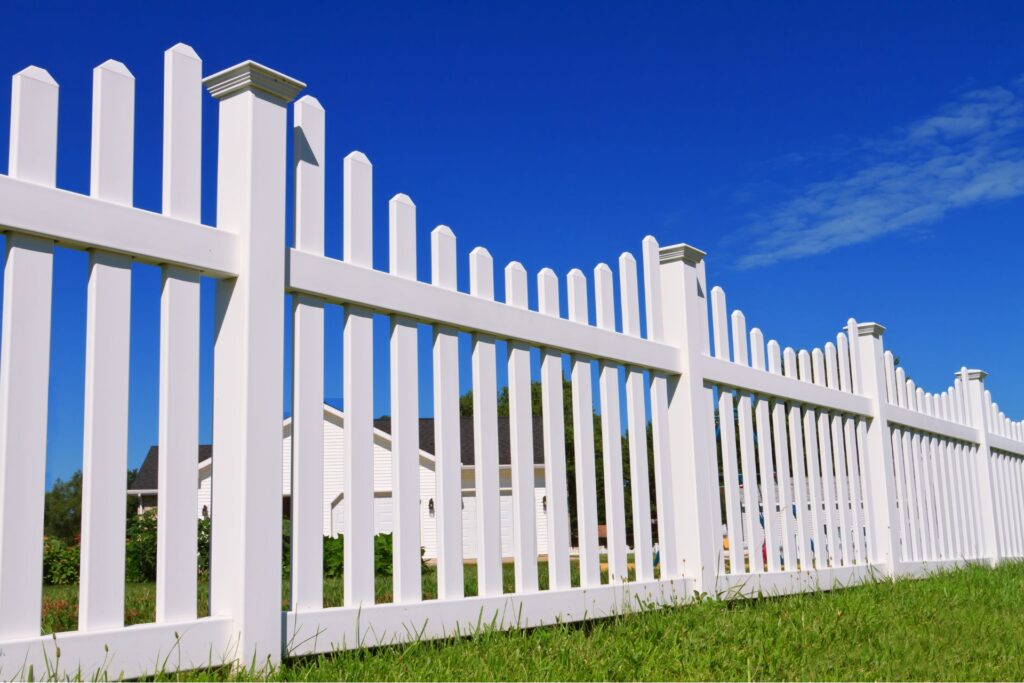
Consider a homeowner in a heritage street wanting to build a 1.8m solid timber fence along their front boundary for security. Despite being under the 2.0m threshold, this would likely require resource consent because it conflicts with the area’s character requirements. The same homeowner could instead install a compliant 1.0m picket fence that maintains the street’s aesthetic appeal without any consent process—a much simpler path forward.
Shared Boundary Fences and the Fencing Act 1978
Wellington City Council regulations sit alongside the nationwide fencing act, which governs the relationship between neighbours when it comes to boundary fences. Understanding both frameworks is essential to avoid disputes and ensure compliance.
Cost Sharing Basics
Under the Fencing Act 1978, adjoining property owners generally share reasonable costs for an “adequate” fence. The law doesn’t require your neighbour to split the bill on an elaborate designer structure—only on what’s considered standard and sufficient for the location. In practice, this typically means a durable timber paling fence around 1.8m high with appropriate foundations.
The Fencing Notice Process
Before building or upgrading a shared boundary fence, you should serve a fencing notice on your neighbour. This formal notification:
- Describes the proposed fence (height, materials, location)
- Outlines your share of the expected costs
- Gives them 21 days to respond with agreement, objections, or a counter-proposal
If you can’t reach agreement, the Fencing Act provides pathways through the Disputes Tribunal or District Court. Council doesn’t mediate these neighbour disputes—that’s outside their jurisdiction.
Documentation Matters
Even when no council consent is required for a standard boundary fence, you should:
- Confirm the exact property boundaries (consider a licensed surveyor for unclear situations)
- Get written agreement on fence height, materials, and cost contributions
- Keep records of all communications with neighbors
In dense Wellington suburbs where fences strongly affect privacy and light, written documentation can prevent disputes that otherwise escalate into expensive legal proceedings. Many homeowners underestimate how quickly a casual agreement can be forgotten or disputed.
Pool Fencing and Safety Barriers in Wellington City
Pool fencing operates under an entirely different regulatory framework than standard residential fences. If you have a swimming pool—or are planning to install one—this section is critical.
The Regulatory Framework
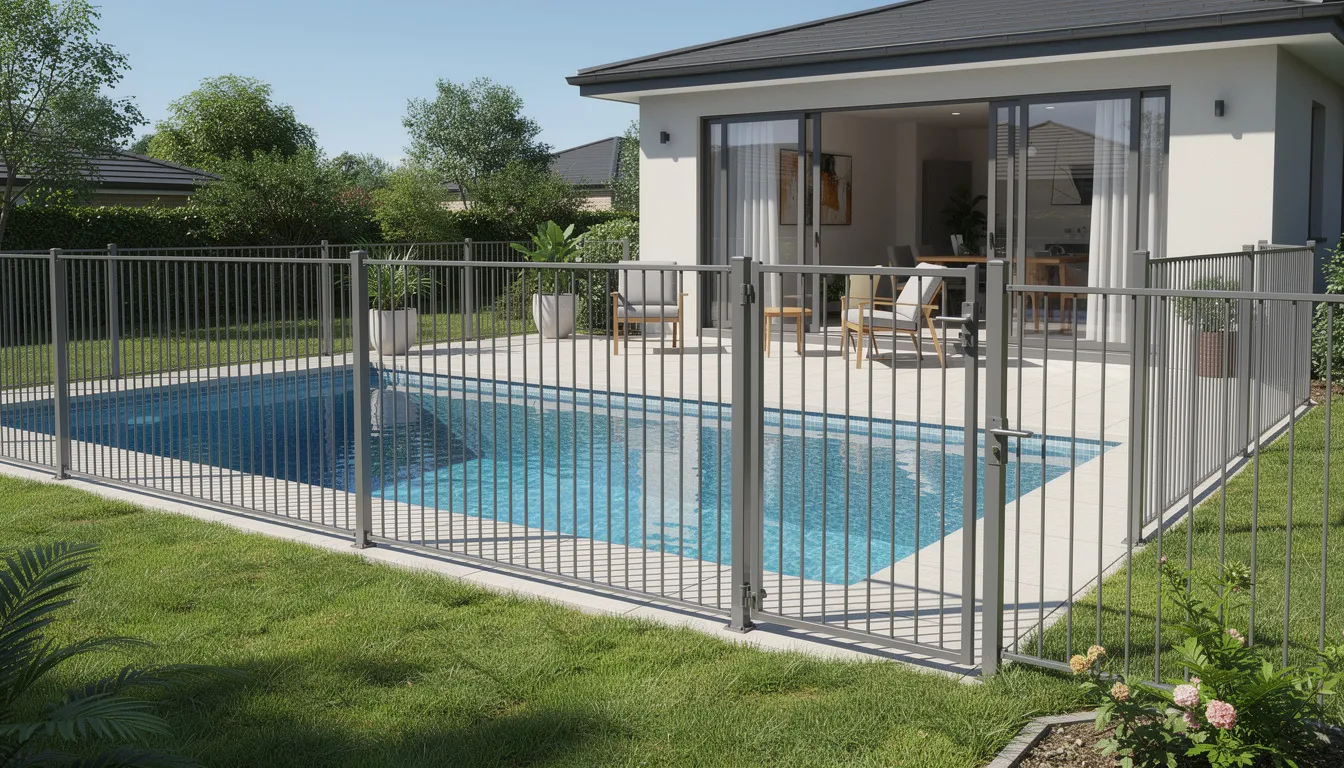
Any residential pool deeper than 400mm must comply with NZ Building Code Clause F9 and the Building (Pools) Amendment Act. Wellington City Council must inspect and approve pool barriers, and there’s no exemption based on the “under 2.0m” rule that applies to ordinary fences.
Pool Fence Requirements
| Requirement | Standard |
|---|---|
| Minimum height | 1.2m |
| Gates | Self-closing and self-latching, opening away from pool area |
| Climbable zone | 900mm clear from pool edge |
| Maximum gaps | No gaps exceeding 100mm |
| Inspection frequency | Every 4 years for existing pools |
These safety regulations exist because drowning remains a significant risk for young children—Water Safety New Zealand reports over 20 annual under-5 fatalities nationwide. The pool fence rules are designed to restrict access and prevent unsupervised entry.
Using Existing Fences as Pool Barriers
An existing fence on your property boundaries can sometimes form part of a compliant pool barrier—but only if it meets all the specific height, gap, and climbability standards. If your boundary fence falls short on any requirement, you’ll need to modify it or install a secondary barrier.
Before constructing or modifying any fence that will serve as a pool barrier, contact Wellington City Council. Failing a mandatory pool inspection results in infringement notices and the requirement to rectify at your expense.
Designing a Fence That Suits Wellington’s Climate and Topography
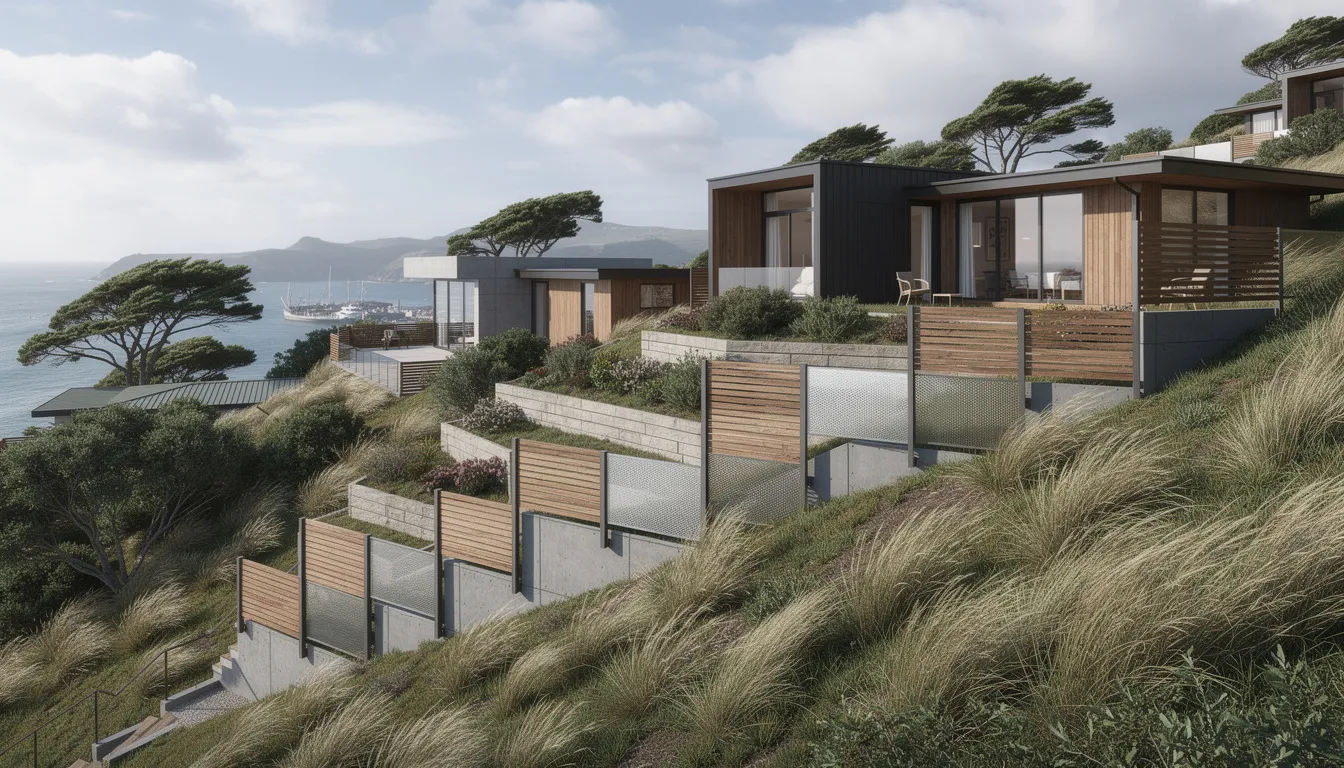
Wellington’s notorious weather and hilly terrain create practical challenges that many homeowners underestimate. A fence that works perfectly in a sheltered Auckland suburb may fail spectacularly on an exposed Wellington ridge.
Wind Considerations
Solid, very tall fences act as wind sails on hilltop or exposed properties. Suburbs like Brooklyn, Karori, and Newlands regularly experience gusts that can topple poorly designed structures. For exposed sites, consider:
- Deeper footings and heavier posts
- Open or slatted designs that allow wind to pass through
- Engineer-certified posts if your fence exceeds 2.0m
- Steel or aluminum frames rated for high wind loads
Sloping Sites
Wellington is full of properties where ground level varies significantly along the boundary. For these sites:
- Plan stepped or raked fence designs carefully
- Measure height at every point along the boundary—not just the ends
- Remember that height limits apply at the highest point, not the average
- Consider how landscaping and retaining walls affect total structure height
Material Selection
Different materials behave differently in Wellington’s weather:
| Material | Advantages | Considerations |
|---|---|---|
| Treated timber | Cost-effective, traditional appearance | Requires ongoing maintenance, can warp in moisture |
| Hardwood | Durable, low maintenance | Higher upfront cost, heavier posts needed |
| Steel/aluminum | Wind-resistant, long lifespan | May need engineering certification if tall |
| Composite | Weather-resistant, low maintenance | Ensure fixings and posts match durability |
For front boundaries, visually lighter designs like low picket fences, metal rail, or slatted timber tend to meet both height regulations and neighbourhood character expectations more easily than solid high barriers.
How to Apply for a Wellington City Council Fence Consent
If your project requires building consent, resource consent, or both, understanding the application process can help you avoid common pitfalls that cause unnecessary delays.
Building Consent Process
The basic steps for building consent are:
- Prepare documentation: Drawings showing fence height, location relative to boundaries and driveways, materials specifications, and footing details
- Submit application: Available online via the Wellington City Council website
- Pay fees: Consent fees vary based on project complexity
- Await assessment: Typically around 20 working days if documentation is complete
- Receive decision: Approval, request for further information, or decline
Resource Consent Process
Resource consent applications often require more extensive documentation:
- Site plans and elevations
- Assessment of environmental effects (AEE)
- Written approvals from affected neighbours
- Explanation of how your fence addresses district plan requirements
Neighbour approval is particularly important when your proposal breaches height in relation to boundary rules or affects the street frontage in character areas.
Common Documentation Pitfalls
Applications frequently stall because of:
- Missing height measurements at the lowest ground point
- Not marking driveways and sightlines on plans
- Failing to note nearby retaining walls
- Unclear boundary location (particularly on older titles)
- Incomplete material specifications
Working with a local designer, surveyor, or fencing contractor experienced with Wellington consents can streamline the process considerably. The upfront investment often pays for itself by avoiding council requests for major changes.
Avoiding Common Fencing Mistakes in Wellington City
Learning from others’ errors is far cheaper than making your own. Here are the issues that most frequently result in council enforcement action, neighbour disputes, or expensive rebuilds.
High-Risk Mistakes
Front fence height violations: Building a front yard fence higher than 1.2m without checking for consents is surprisingly common. Property owners assume the 2.0m rule applies everywhere—it doesn’t.
Corner site visibility: Installing solid high fences on corner properties that block driver visibility creates genuine public safety hazards and attracts swift council attention.
Boundary encroachment: Placing fences slightly over the actual boundary line—even by 50mm—can trigger disputes, removal orders, and surveyor costs of $1,500-$3,000.
Retaining wall combinations: Building a 1.8m fence on top of a high retaining wall accidentally breaches overall height limits. On Wellington’s sloped sites, this is extremely common.
Fencing Act non-compliance: Starting work without consulting neighbours, or assuming they must pay for an expensive designer fence beyond what’s “adequate,” leads to Disputes Tribunal claims averaging $5,000 in legal fees.
Best Practice Checklist
- Survey boundaries when there’s any doubt about exact location
- Keep written records of all neighbour communications
- Check the latest council guidance online before finalising designs
- Design conservatively if unsure about height thresholds
- Measure height from the lowest adjacent ground level
- Consider how your fence affects neighbours’ light and privacy
Working with Professionals on Wellington Fencing Projects
For straightforward boundary fences, many homeowners handle the process themselves. But for complex projects—tall fences, pool barriers, heritage areas, sloping sites—professional installation and guidance can save significant money and frustration.
What Professionals Bring
A qualified professional fence builder or designer familiar with the wellington region offers:
- Knowledge of current council regulations and how they’re interpreted in practice
- Experience preparing consent drawings that meet council requirements
- Familiarity with the fencing act and neighbour agreement processes
- Understanding of Wellington’s wind loads and site conditions
- Relationships with council officers that can help clarify requirements
Choosing the Right Professional
When selecting a contractor, look for:
- Demonstrated experience with Wellington City Council consent applications
- Portfolio of completed projects in conditions similar to yours
- Willingness to provide detailed written quotes specifying fence height, materials, post spacing, and consent assumptions
- Clear communication about neighbour contribution expectations
- References from recent Wellington projects
Getting Quotes
Request quotes that specify:
- Total fence height and length
- Materials for posts, palings, and rails
- Post spacing and footing specifications
- Whether the quote includes consent application assistance
- Assumptions about neighbour cost contributions
- Ongoing maintenance recommendations
A good professional can also advise when a proposed fence is likely to need building and resource consent, and coordinate both applications to ensure compliance without duplicating effort.
FAQs: Fencing Regulations in Wellington City
Does a 1.8m timber boundary fence in Wellington need any kind of council consent?
A standard 1.8m high timber fence on a typical residential side or rear boundary will usually not need building or resource consent, provided it meets several conditions. The fence must not be part of a pool barrier, must not sit on top of a tall retaining wall that pushes the combined height over 2.0m, and must not create visibility problems for vehicles at driveways or intersections.
That said, property owners should still confirm their zone rules in the Wellington City District Plan. Some character or heritage areas impose additional restrictions on solid fencing, even at heights below 2.0m. And regardless of council consent requirements, the Fencing Act 1978 obligations toward neighbours still apply—you should still serve a fencing notice and agree on cost sharing before building on a shared boundary.
Can I build a solid 2m fence along my front boundary in Wellington City?
Front or road-facing boundaries face tighter controls than side or rear boundaries. Wellington City generally expects front fences to be no higher than about 1.2m before specific consents become necessary. A 2.0m solid front fence will almost always require at least building consent, and likely a resource consent assessment examining streetscape effects and driver visibility impacts.
Open or lower front fence designs—such as picket fences, rail fencing, or slatted timber—are usually preferred and much easier to keep within permitted activity rules. If privacy or security is your primary concern, consider combining a lower front fence with landscaping or a taller fence set back from the street boundary.
How do I measure fence height correctly on a sloping Wellington site?
Fence height is measured from the finished ground level on the lower side of the fence to the top of the structure, including any capping, trellis, or decorative elements. On sloping land, you need to check height at multiple points along the boundary—not just at the ends.
Any single point where your fence exceeds 2.0m can trigger consent requirements, even if most of the fence is well below that threshold. For stepped or terraced designs, each section is measured independently from its adjacent ground level. If you’re unsure about measurements on a complex site, a simple survey from a licensed professional can confirm heights before you apply for consent and prevent expensive modifications later.
What happens if my fence does not comply with Wellington City Council rules?
If council discovers a non-compliant fence—often following a neighbour complaint—they can issue a notice to fix requiring you to lower, modify, or remove the structure. In serious cases, particularly where public safety is affected or where the owner fails to cooperate, council may issue infringement fines up to $200,000 under Building Act Section 40.
Some owners attempt retrospective consent applications, but there’s no guarantee these will be granted, and they typically cost more than seeking approval in advance. If you realise your fence is non-compliant, contact council promptly. Early cooperation and willingness to rectify issues can significantly reduce enforcement consequences compared to ignoring the problem.
Are hedges and living screens regulated the same way as fences in Wellington?
Hedges and planted screens are generally not treated as “buildings” under the Building Act, so the standard fence height exemptions don’t apply directly. You won’t need building consent for a tall hedge the way you would for a tall fence structure.
However, very tall or poorly maintained hedges can still cause significant neighbour disputes and may be addressed through separate legal avenues—typically nuisance claims or privacy complaints. From a practical standpoint, homeowners should manage hedge height and width with similar consideration to a fence, keeping in mind sunlight access, views, and neighbourhood character. Even without a formal height limit, an overgrown hedge that blocks your neighbour’s light or views can create legal liability and damage neighbourly relationships.
Conclusion
Understanding and adhering to the fencing regulations set by Wellington City Council is essential for any property owner planning to build or modify a fence. Whether you are installing a new timber fence, upgrading an existing fence, or ensuring your pool fence complies with safety standards, knowing the height limits, consent requirements, and neighbour obligations will save you time, money, and potential disputes.
Remember that front yard fences typically have lower height limits, around 1.2 meters, to maintain street visibility and character, while side and rear boundary fences can generally be up to 2.0 meters without requiring building consent. However, special considerations apply to corner properties, heritage zones, and fences combined with retaining walls or pool barriers, which may trigger the need for building or resource consent.
Consulting the Wellington City Council’s district plan and seeking expert guidance from professional fence builders can help you navigate the consent process smoothly and ensure your fence is safe, compliant, and enhances your property’s aesthetic appeal. Open communication with neighbours and proper documentation under the Fencing Act 1978 are also key to preventing disputes and fostering good relationships.
By following these guidelines and choosing the right materials and designs suited to Wellington’s unique climate and topography, you can create a durable, attractive, and compliant fence that meets your privacy, security, and safety needs without unnecessary delays or legal complications.